Haa

Bhutan Haa District or Dzongkhag Haa (alternative spelling Ha) is one of the 20 dzongkhag or districts comprising Bhutan. Per the 2005 census, the population of Haa dzongkhag was 11,648, making it the second least populated dzongkhag in Bhutan after Gasa.
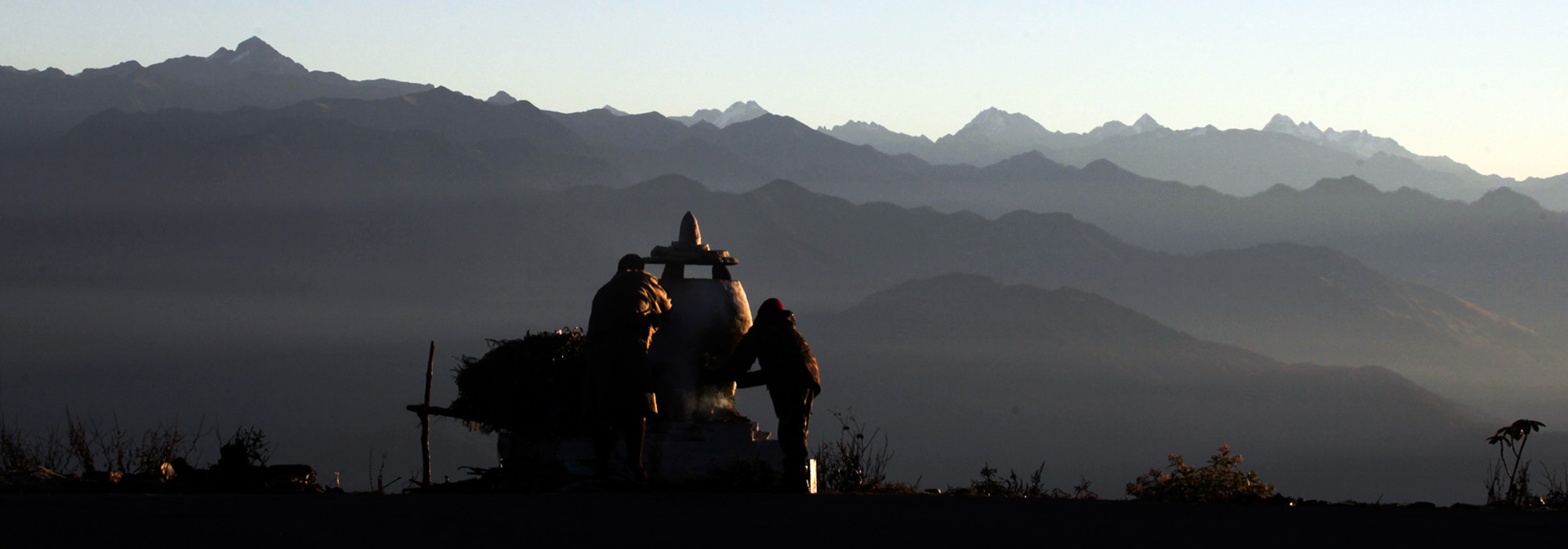
The high altitude Haa valley lies south of the Paro valley. The staple crops of this large, fertile valley are wheat, potatoes, barley and millet. Yaks are herded in the upper reaches of the valley, and yak meat from Haa is considered a great delicacy by the townspeople of Thimphu. A day trip to Haa with picnic lunch by the river near new Haa Dzong is very pleasant in the warmer months of the year, when one can drive from Paro to Haa over the Chele-la pass (3,810m/12,573ft). On a clear day there is a superb view of Mts. Jhomolhari & Jichu Drake from the pass.

National Council from Haa

What to see in Haa

The principal attractions of a visit to Haa are the journey up and over the pass and the picturesque valley itself. Visits can be made to two famous monasteries, Lhakhang Karpo (White Temple) and Lhakhang Nagpo (Black Temple) The central shrine in Lhakhang Nagpo is said to be almost identical to that of the Jowo temple in Lhasa. Legend has it that local deities assisted in the construction of Lhakhang Karpo.

Haa’s major feature is the Haa Valley, a steep north-south valley with a narrow floor. The main crops grown in the valley are wheat and barley, although some rice is grown in the lower reaches of the valley. Potatoes, chillies, apples and other cash crops are grown by farmers on the valley floor, along terraced hillsides, and in some of the more accessible side valleys. Per the census, almost every household owns livestock of some type, most commonly yaks and cattle, but also chickens, pigs, and horses. 78% of Haa is covered with forest, and forestry plays an important part in local economy.

Haa Dzong Haa Dzong
The name Haa (pronounced “hah”), as well as the more ancient name Has (pronounced “hay”), connotes esoteric hiddenness. An alternative name for the district is Hidden-Land Rice Valley.

In 2002 the valley was opened to foreign tourism, although its tourist resources remain largely undeveloped compared with Paro, Thimphu, and Bumthang districts.
Contents

Dzongkhag profile

Haa Dzongkhag is situated at the elevation ranging from 1000 to 5600 meters above sea level. It has cold and dry winder and wet and warm summer. The extreme winter temperature drops down to -7 degree Celsius in the winter. Snow fall is expected several times in a year from late October to April.

The Dzongkhag has a total population of 13,401 including recent addition of 1853 population from seven villages of Samtse Dzongkhag emerging into a new Gakiling gewog.

Due to the hard physical barriers and to improve the lives of the people, a Drungkhag has been recently approved.

Other features

Also near the Black and White temples is a special chorten marking the site where an imprint of Guru Padmasambhava’s body and hat may be found in a large rock.

In the Samar side-valley may be found a bridge known as Has Samarpudung. Below the bridge is the lake of a wishing cow whose stone udders can be seen in the lake.

WP SlimStat