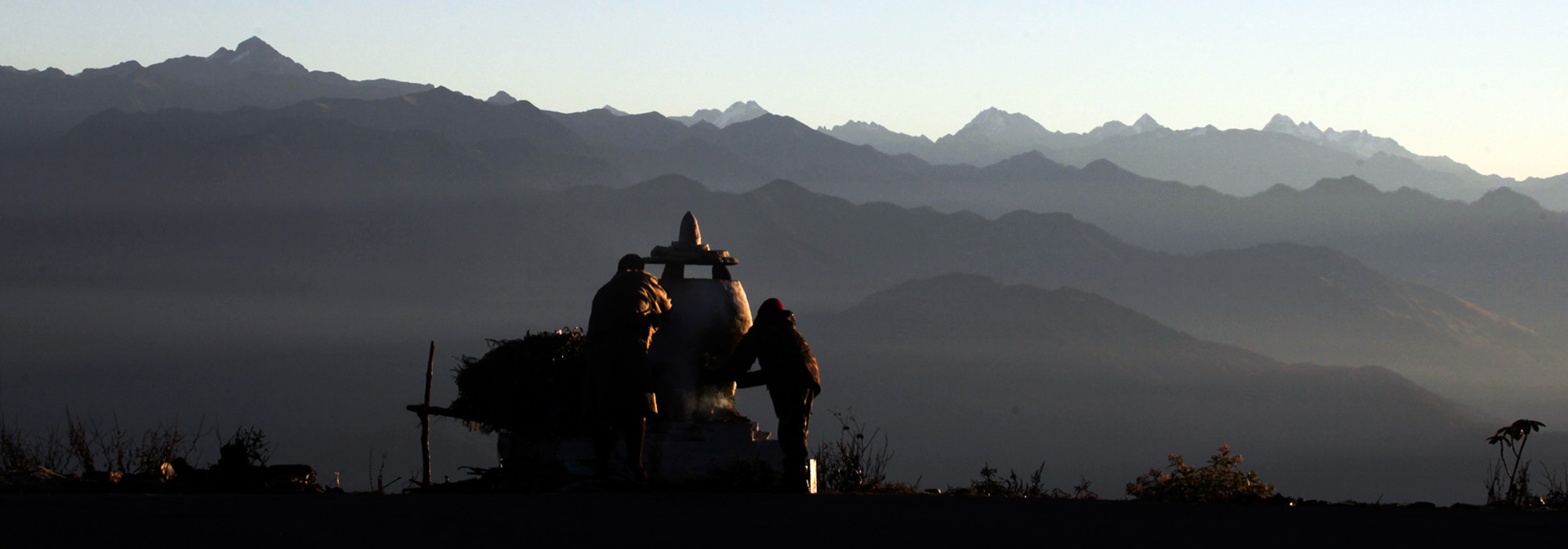
Trashiyangtse

Bhutan Chukha District or Trashiyangtse Trashiyangste is one of the 20 dzongkhag (districts) comprising Bhutan.
Trashiyangtse is a rapidly growing town and the administrative center for this district. Situated in a small river valley, it is a lovely spot from which to take walks in the surrounding countryside. The Dzong overlooking the town was built in the late 1990s when the new district was created. Trashiyangtse is famous for its wooden containers and bowls, which make inexpensive, attractive and useful mementos of a visit to this remote region. The Institute for Zorig Chusum, where students study the 13 traditional arts and crafts of Bhutan, is also worth a visit.

National Council from Trashiyangtse

Trashiyangtse another Eco-Tourism Destination 

Trashiyangtse was a Dungkhag under the administration of Trashigang Dzongkhag till 1992. It was created as a separate full fledged Dzongkhag co-inciding with the start of the seventh plan in 1992. The Dzongkhag has eight geogs namely Bumdeling, Jamkhar, Khamdang, Ramjar, Tomzhangtshen, Trashiyangtse, Toetsho, and Yalang with 117 villages and 3489 households..

Two and half five-year development plans have brought about manifold socio-economic changes in the lives of the people in the Dzongkhag. As of first half of 2006 (4th year of 9th Five Year Plan) the Dzongkhag has one Higher Secondary School, one Middle Secondary School, four Lower Secondary Schools, twenty two community primary Schools, one Hospital, seven Basic Health Units (BHU), eight Renewable Natural Resources (RNR-EC) Extension Centers, one Institute for Zorig Chusum and a 40 KM black topped road. Over 70% of the households have access to piped drinking water supply.

Chorten Kora Chorten Kora : This dazzling white Stupak is situated on the riverbank below the town. Constructed in 1740 by Lama Ngawang Loday, it is built in the same style as Bodnath Stupa in Nepal, with eyes painted at the four cardinal points. During the second month of the lunar calendar there is an interesting celebration here, known as ‘Kora’.

The Dzongkhag is connected to Trashigang by a 54 KM long road passing through Trashiyangtse, Khamdang and Jamkhar Geog. Khamdang is further connected by a feeder road till Tsenkharla ( Geog center) Tongzhang and Ramjar Goeogs are connected by rural access roads ( World Bank) of 12 km and 7 km length respectively. Bumdeling geog is connected to Trashiyangtse town by 8 KM farm road, and Jamkhar Geog by 4 km farm road to Tsergom on Yangtse – Trashigang district road. A 10 km long farm road from Tarshiyangtse town is nearing completion which will connect Womanang village of Bumdeling Geog to Dzongkhag headquarters. Trashiyangtse is also known for its winter roosting place for the black-necked cranes, and possibilities of discovering very rare flora and fauna in its protected area under Bumdeling Wildlife Sanctuary.

The Dzongkhag has very important historical and religious sites. The best known among them are the Gomphu Kora located near Doksum under Tongzhang Geog, the Rigsum Goenpa located in Bumdeling Geog, Dechen Phodrang Lhakhang and Omba Nye. Chorten Cora a stupa built over three hundred years ago is a very sacred destination for the people of Tawang in adjoining Arunachal Pradesh of India. Dzongkhag headquarters is located close to it.

Trashiyangtse / Chorten Cora town has been coming up fast and perhaps is the only town in Bhutan that boast of looking uniquely Bhutanese with its buildings built in true tradition of Bhutan in design, materials and craftsmanship with the modern day comfort and styles within.

Bomdeling: A pleasant walk of about three hours from Chorten Kora, Bomdeling is an annual migration place for black necked cranes, which fly over from nearby Tibet to pass the winter months in a warmer climate.