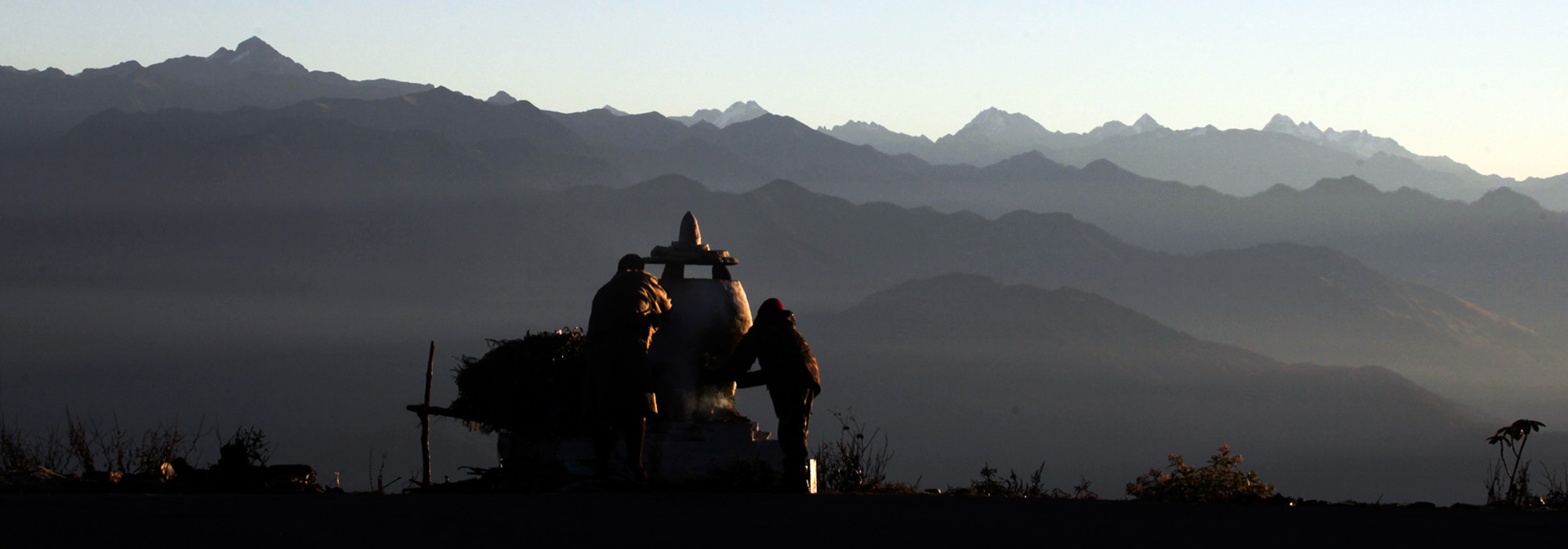
Trashigang

Bhutan Trashigang District or Dzongkhag Trashigang also spelled Tashigang, is Bhutan’s easternmost district.

Trashigang lies in the far east of Bhutan, and is the country’s largest district. Trashigang town, on the hillside above the Gamri Chu (river), was once the center for a busy trade with Tibet. Today it is the junction of the east-west highway, with road connections to Samdrup Jongkhar and then into the Indian state of Assam. This town is also the principle market place for the semi-nomadic people of Merak and Sakteng, whose way of dress is unique in Bhutan.

Sherubtse College

Degree programs in Sherubtse College

Life with Telephone in Sakten

Sakten Unique Identity and Lifestyle

Trashigang Dzongkhag has 3 Dungkhags namely; Sakteng, Thrimshing and Wamrong under its administration. It has 16 Geogs namely; Bartsham, Bidung, Kanglung, Kangpara, Khaling, Lumang, Merak, Nanong, Phongmey, Radhi, Sakteng, Samkhar, Shongphu, Thrimshing, Uzorong and Yangneer Geogs. It has 45 Dzongkhag Yargye Tshogchung (DYT) members and 188 Geog Yargye Tshogchung members.

Trashigang dzong was built in 1659 by Trongsa Penlop, Chogyel Minjur Tempa (1659-1676 AD, the 3rd Deb of Bhutan). The dzong was then named as Trashigang, “the Fortress of the Auspicious Mountain”. The dzong was expended by Tenzin Rabgye, 4th Desi of Bhutan (1680-1694) and restored it around 1950 by Dasho Dopola, Trashigang Dzongpon. During 1960s and 1970s late Lyonpo Tamji Jagar (then the Nyerchen of Trashigang) and Dasho Kuenzang Tangbi carried out some repairs and changed the shingle roofing with asbestos sheet.

The Dzong has 8 different Lhakhang and these are Lam Lhakhang in the central tower which is dedicated to Shabdrung Rimpochhe, the Tshechu Lhakhang with Guru Tshengye, the Goenkhang dedicated to deities Mahakala and Mahakali, the Dupthob Lhakhang for Dupthob Thangthong Gyalpo and other great Buddhist saints, the Kuenray Lhakhang, the Tshokshing Lhakhang which has the lineage of Drukpa, Karamapa, Nyingmapa and Zogchen displayed and the Dema Lhakhang with 21 kinds of Demas.
The Dzong is being used as the Spiritual, Judicial and Administrative Centre of Trashigang Dzongkhag.

The following officials served as the Dzongdag (Governor) of this Dzongkhag:
Dasho Tenzin Dorji
Dasho Kunzang Tangbi (1971-1986)
Dasho Tsheten Dorji (1986-1988)
Dasho Dorji Namgyel (1988-1992)
Dasho Rinzin Gyeltshen (1992-1997)
Dasho Dr. Sonam Tenzin (1997-2000)
Dasho Sherub Tenzin (2001-2003)
Dasho Namgay Wangchuk (2003-2006)
Dasho Minjur Dorji (2006-)

LOCATION & AREA

Trashigang Dzongkhag ha s borders with Mongar Dzongkhag in the west, Samdrup Jongkhar and Pemagatshel Dzongkhag in the South, Trashi Yangtse Dzongkhag in the north and Indian state of Aranachal Pradesh in the east. Trashigang is 555 km away from Thimphu, the capital city and is one of the largest Dzongkhag in the Kingdom with total area about 3150 square kilometers. Dangme chu, one of the largest river in the country passes through the Dzongkhag. The elevation ranges from 600 m to over 4500 m above sea level. The climate is mainly temperate with an annual rainfall between 1000 mm and 2000 mm. The lowest human settlement is found at an altitude of 550 m above sea level at Nanong and the higest at Merak at an altitude of 4600 m above sea level.

Mithidrang falls under Samkhar geog and is where the main town and the Dzongkhag Administration Headquarter is located.

The inhabitants of Trashigang district are mainly Sharchops, which means “easterner” in Dzongkha, the national language. The Sharchops appear to mix Indian and Tibetan blood whereas the Ngalops of central and western Bhutan appear to be mainly Tibetan.

Economy and education

While not a major urban area, Trashigang has the densest population in Bhutan. It used to be part of an important trade route connecting Assam to Tibet, and still is a primary route for Bhutanese trade with India. Major cities include Trashigang, Radhi, and Phongmey. The district produces a lot of rice and lavender. There are several tourist packages to Bhutan that include trips from Thimphu to Trashigang, despite the 17 hour journey from the capital over the rough and dangerous Lateral Road.

Trashigang dzongkhag is also the site of Sherubtse College, the original college within the Royal University of Bhutan system.

Places of interest

Trashigang Dzong Trashigang Dzong

This dzong, or fortress, was built in 1659 by the third Druk Desi to defend against Tibetan invaders. Because of its altitude invading armies remarked that “it is not a dzong on the ground, it is in the sky”.

Gom Kora

An ancient lhakhang or temple in the district, known for its rock garden, contains a sacred footprint said to be either that of Guru Rimpoche or that of a khandroma (angel). 24 km. from Trashigang, the temple of Gom Kora is set on a small alluvial plateau overlooking the river. Surrounded by rice fields and clumps of banana trees, it looks like an oasis in an arid landscape. It is one of the famous places where Guru Rinpoche meditated in order to subdue a demon which dwelt in a huge black rock.